The Buy Note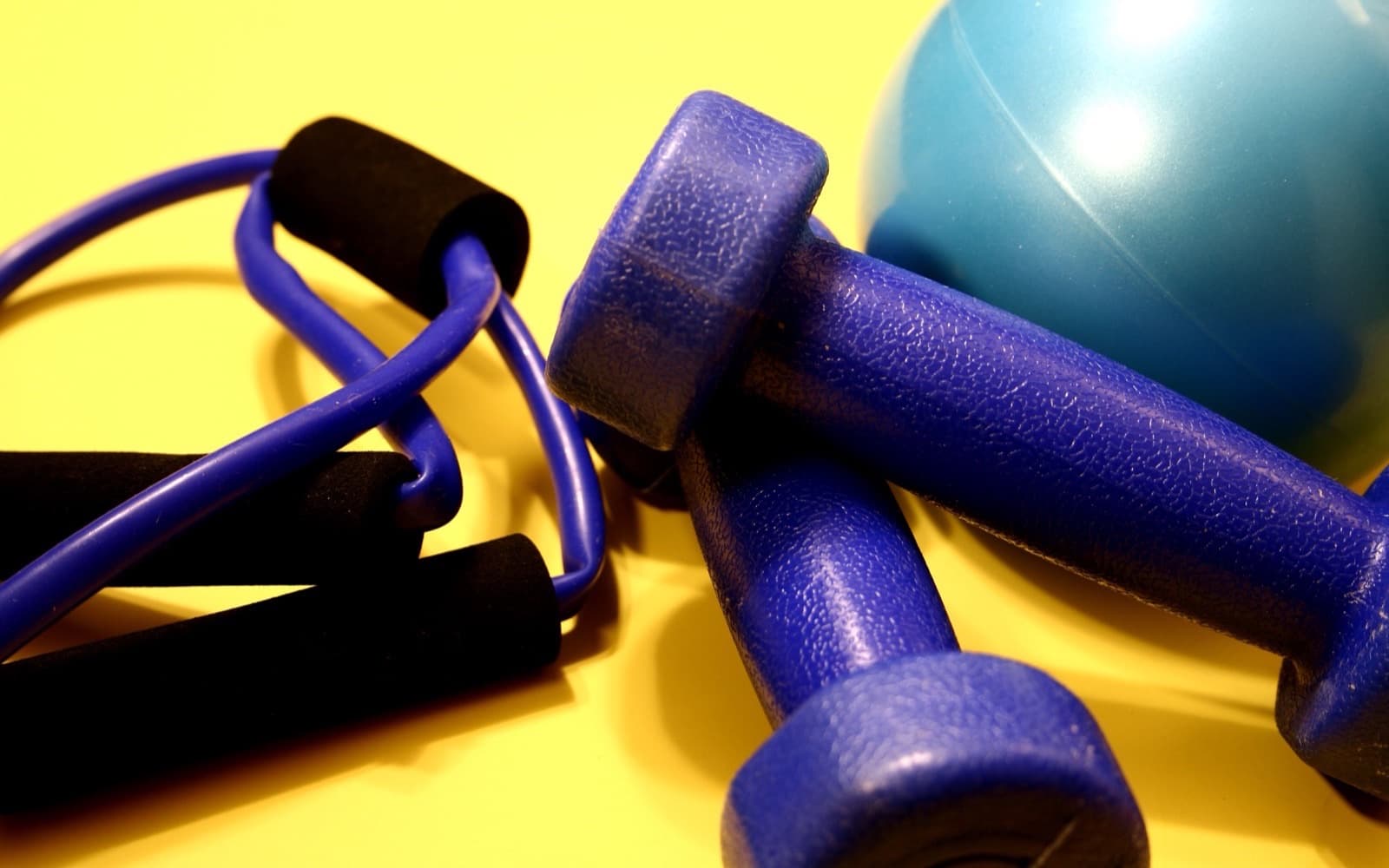
If floor space is your problem, adjustable dumbbells solve it and you pay for that in mechanism. If space is not your problem, plain hex dumbbells are the better buy and it is not close — nothing breaks, nothing rattles, nothing needs a replacement part in five years. A pull-up bar and a set of bands cost little next to either and cover the gaps both leave.
Nothing here has been bought, opened or tested. These are picks made from what each product is built out of and designed to do, and from its reputation — not from anybody here having owned one.
Bowflex SelectTech 552
The Bowflex SelectTech 552 has been the default answer to "I want dumbbells but I live in a flat" for well over a decade. Each handle carries a stack of flat plates in a cradle; you turn a dial at each end and lift out only the plates you selected. The 552 covers roughly 5 to 52.5 lb per hand, in small increments at the light end, which is the range most people at home will ever use. It replaces something like fifteen pairs of fixed dumbbells with two objects and a pair of trays.
It suits someone training in a living room who wants the whole upper-body range without a rack against the wall, and who is happy to spend a few seconds changing weight between sets.
The weakness is the mechanism and the shell around it. The plates are held in moulded plastic, and the failure mode people describe is a dropped dumbbell — not thrown, just set down hard at the end of a set — cracking a shroud or knocking the selection out of true. You cannot drop these the way you can drop a lump of iron. The other cost is length: even at a light setting, the handle is as long as the full stack, so anything where the dumbbells pass close to your body feels bulkier than it should.
PowerBlock adjustable dumbbells
PowerBlock takes the opposite approach. Instead of a stack of loose plates you lift out, the weight is a set of nested steel cages, and you push a selector pin through to lock in how many layers come with you. Your hand goes inside the block rather than gripping a bar with weight either side. The Sport range tops out at a modest weight and suits general fitness; the Elite line goes considerably heavier and takes expansion kits so the same handles grow later.
It suits people who want an adjustable that behaves more like solid metal than like a machine — fewer moving parts, no shrouds to crack — and who like that the block does not get longer as it gets heavier. That last point is the real advantage over a dial-type set: the footprint stays the same, which makes lunges and pressing feel less unwieldy.
The weakness is the shape. Your hand sits inside a rectangular frame, so knuckle clearance is limited, and anyone with large hands or who wraps their thumb high will notice. The flat-bottomed block also makes floor-resting positions between reps less comfortable than a round dumbbell head, and the pin is one more thing to seat properly before every set.
Plain hex dumbbells
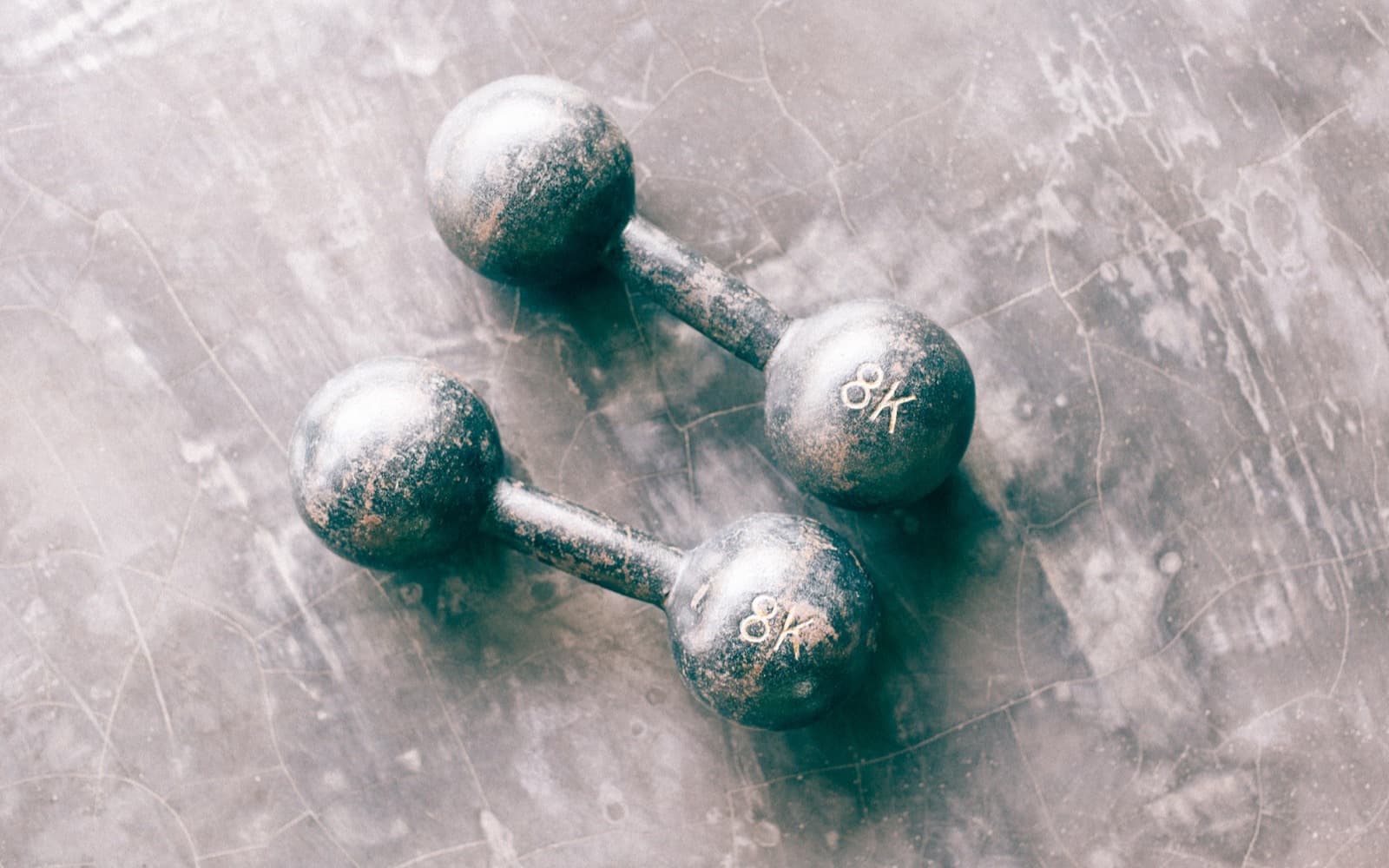
The unglamorous answer, and the one that outlasts everything else in this piece. A hex dumbbell is a single casting — cast iron, usually with a rubber or urethane coating and a knurled steel handle — with six-sided heads so it does not roll away on a sloped floor. There is nothing to adjust, nothing to select, and no part to replace. Rubber-coated and bare cast-iron hex dumbbells are the same product they were fifteen years ago.
They suit anyone with somewhere to put them: a garage, a spare room, a corner that can take a small rack. They suit people who superset, because switching pairs takes no time at all. They also suit people who are hard on equipment, since setting one down heavily is a non-event.
The weakness is that you buy weight one pair at a time, and the useful jumps come quickly. Covering a real training range means many pairs, and each one occupies floor. The rubber coating on cheaper sets also has a smell when new that takes weeks to fade in a closed room, and the coating can mark a light-coloured floor.
Kettlebells for a small flat
A kettlebell is one piece of cast iron with a handle over the top, so the mass hangs below and behind your grip. That offset is the whole point: it makes swings, cleans and carries feel natural, and it makes the bell easy to hold in a rack position against the forearm. One bell stands in a corner and takes less floor than a pair of anything.
Single-piece cast-iron bells — the plain black ones sold across every budget and mid-range line — are the sensible buy. What matters is a handle wide enough for two hands, smooth enough not to tear them, and a finish that does not turn slippery when your hands are damp.
The weakness is that the offset works against you everywhere else. Pressing and curling with a kettlebell feels wrong until your wrist adapts, and the bell can bang the forearm on the way up. Each bell is one fixed weight, so progressing means buying another, and the jumps between standard sizes are large — larger than most people can bridge in a single step on an upper-body movement.
| Space taken | Weight changes | Likely to fail | |
|---|---|---|---|
| Adjustable (dial or block) | One pair, one tray | Seconds, per set | Mechanism and shrouds |
| Hex dumbbells | A rack's worth | Instant, if you own the pair | Essentially nothing |
| Kettlebells | A corner | Buy another bell | Essentially nothing |
A pull-up bar and a set of bands
The two cheapest additions do the most for what dumbbells leave out. A doorway bar of the leverage type — the Iron Gym Total Upper Body Workout Bar is the long-standing example — hooks over the frame and braces against the wall above the door, so it needs no screws. It gives you vertical pulling, which nothing in a dumbbell set really replaces.
Its weakness is the doorframe. These bars need trim of a particular depth and a frame solid enough to take the load, and they can mark or dent the paintwork above the door. In a rented flat with slim modern architrave, a leverage bar may simply not fit, and no amount of adjustment will make it safe.
For bands, the flat latex sheets sold for rehabilitation — TheraBand is the name that has been in physiotherapy rooms for decades — are the reliable pick for shoulder work, warm-ups and light rotational movement. Loop bands cover pull-up assistance and hip work.
The weakness of every band is the same: latex perishes. Heat, sunlight and time make it brittle, and a band that snaps under tension does so suddenly and near your face. They also give you almost no load at the bottom of a movement and a lot at the top, which is the opposite of what most lifts want.
When to buy none of this
If you have not trained consistently for a month, buy nothing yet. The most common home-gym outcome is a set of dumbbells under a bed. Bodyweight work costs nothing and tells you honestly whether the habit is going to stick.
If it does stick and the budget is small, the cheapest sensible route is one moderate kettlebell, a set of loop bands, and a floor. That covers hinging, squatting, pressing and pulling well enough to make real progress, and the generic versions of all three are functionally the same as the branded ones — there is no clever engineering in a lump of cast iron.
And if you are within walking distance of a gym you would actually use, a membership beats all of it. Home equipment is bought to remove the friction of leaving the house. If leaving the house is not your friction, you are solving the wrong problem.