The Buy Note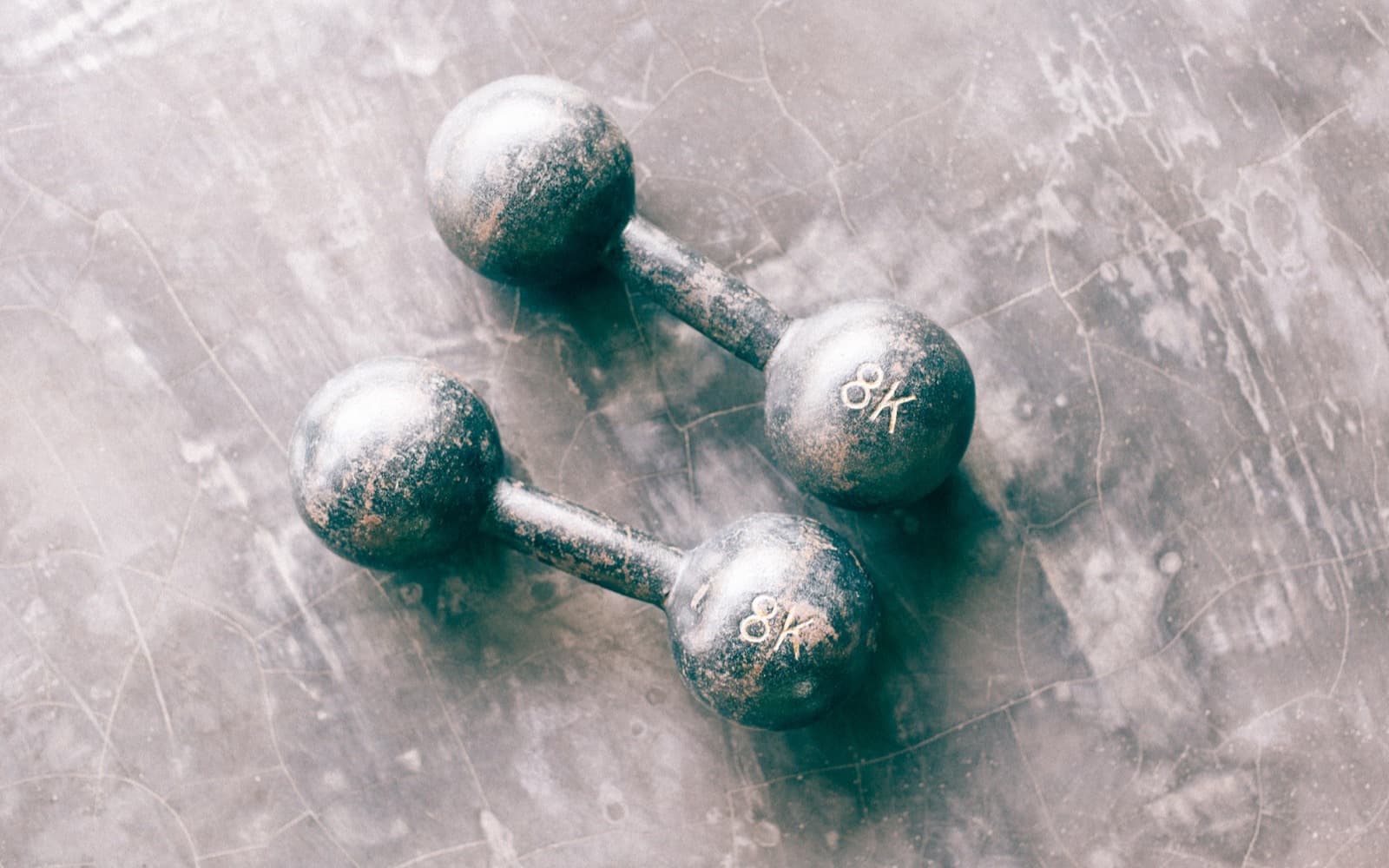
For most homes the answer is adjustable dumbbells, and the reason is floor space rather than performance. Fixed dumbbells are the better object — nothing to fail, nothing to set, instant between sets — and a useful spread of them is a piece of furniture that needs a wall. The real decision is where the things live, how far apart the weights are, and what is under them when they land.
What each design costs you
A fixed dumbbell is a handle with weight welded or cast to it. There is no mechanism, so there is nothing to jam, rattle or slip. You pick it up and put it down. The problem is arithmetic: one dumbbell is one weight, a useful range is six or eight pairs, and six or eight pairs is a rack, and a rack is a metre of wall you are not getting back.
An adjustable dumbbell puts a range into one footprint. Two mechanisms dominate. Selector types sit in a cradle and you turn a dial or move a pin, which picks up plates and leaves the rest behind — fast, tidy, and full of moving parts that do not like being dropped. Spinlock types are a bare bar with loose plates and a threaded collar at each end; slow to change, but simple enough that there is almost nothing to break, and cheaper for the weight you get.
| Fixed | Selector-type adjustable | Spinlock adjustable | |
|---|---|---|---|
| Space for a full range | A rack | One cradle | A bar plus a plate pile |
| Change between sets | None | A few seconds | Half a minute or more |
| If dropped | Fine | Often the end of it | Plates scatter |
| Length at light weights | Short | Full length always | Short |
| What goes wrong | Nothing | Selector wear, rattle | Collars work loose |
That "length at light weights" row matters more than it reads. A selector dumbbell set to its lightest is usually still close to its full length, because the housing does not shrink. For lateral raises and anything overhead in a low-ceilinged room, a long dumbbell is genuinely awkward in a way a short one is not.
Where they live, and what is underneath
This is the question people skip and then regret. A rack of fixed dumbbells concentrates a lot of mass onto four small feet. On a concrete ground floor, fine. On a suspended timber floor upstairs, that is a point load worth thinking about, and the fix is to place the rack against a wall and across the joists rather than along one.
Then there is the landing. Rubber matting — the interlocking tiles sold for gym floors, or the thicker stall mats sold for horses — does three separate jobs: it protects the floor beneath, it protects the dumbbell, and it takes the sharpness off the noise. The thicker mats are much better at all three and much harder to move.
- If you rent, or there is a room below you that belongs to somebody else, matting stops being optional and light weights stop being a compromise.
- Measure the height of an adjustable set in its cradle before you assume it slides under a bed or a desk. Many do not.
- A cradle needs floor. That is the trade for not needing a rack, and in a small room it is not a small trade.
- Dropping is the failure mode for adjustable dumbbells generally. If you train close to failure and expect to bail out of a press, that argues for fixed weights, mats, or both.
Increments, and why small jumps matter
Progress in strength training happens in steps, and the size of the step decides how long you are stuck. The thing to understand is that the same jump means different things on different lifts.
Going from 20 kg to 22.5 kg on a goblet squat is a change of about an eighth. You will barely notice it. Going from 4 kg to 6 kg on a lateral raise is a change of half, and there is no honest way to make that jump — you either grind the light weight for months or you do bad reps with the heavy one. Small muscles need small increments, and small increments are exactly what most sets are worst at.
- Selector sets usually step in 2.5 kg at the top of their range. Some step more finely at the bottom, which is the half that matters. Check that, not the top number.
- Spinlock sets are as fine as your smallest plate. Buying a few extra 1.25 kg plates is the cheapest fix for a stalled press there is.
- Fixed dumbbells sold in pairs often step in 2 kg increments at the light end and widen as they get heavier, which is the right shape.
- Magnetic add-on weights that clip to a handle exist and solve this for a small extra outlay, if the handle they fit is the one you own.
Hex, round, and the part your hand touches
Hex dumbbells have flat faces and do not roll, which is the whole argument. They sit still on the floor, which matters when your hands are on them for push-ups or renegade rows, and they stay where you put them on a slope of a mat. Rubber-coated hex is quieter and kinder to floors, and it smells of rubber for a few weeks. Round dumbbells roll, which is a nuisance loose on a floor and an advantage in a rack, where they slide in and out without needing to be aligned.
The handle is the part nobody photographs. A fatter handle taxes grip before it taxes the muscle you were trying to train — sometimes a feature, usually not. Knurling is the crosshatch pattern cut into the grip; a smooth chrome handle becomes slippery once your hands are damp, and an aggressive knurl tears skin on high-rep sets. Handle length is worth checking if you have wide hands, because a short one puts the heel of your palm against the plate.
How much weight a beginner actually needs
Considerably less than the sets are sized for, and the honest limit is your pressing lifts rather than your legs.
Overhead press, bench press, lateral raises and curls live at the lighter end and stay there a long time, because the muscles doing the work are small. Rows and split squats climb faster. Straight lower-body work — squats, deadlifts, hip hinges — outruns dumbbells entirely and does it quickly, because your legs will be strong enough long before your hands can hold on. That is a grip limit, not a leg limit, and no dumbbell purchase solves it.
A pair reaching roughly 20 to 25 kg each covers almost everybody's first couple of years of upper-body work. Buying to 40 kg because a set offers it is buying for a version of yourself who, if they arrive at all, will want a barbell instead.
When the cheap option is the right one
If you train mostly legs, dumbbells are the wrong tool and a heavier answer is coming regardless. If you have a gym membership you use, a home set will mostly gather laundry. And if this is week one of an intention, a single moderate pair and a floor is enough to find out whether the habit sticks — and cheap to be wrong about.
There is also a case where light and fixed genuinely beats adjustable. If what you need is a pair of small weights for rehab, shoulder work, mobility or a class you follow along with at home, buy two fixed dumbbells and stop. They are shorter, they need no cradle, they never rattle, and you will never once wish they had a dial.
And if you live above a neighbour, the constraint decides for you before any of the above does. Lighter weights, more reps, thick matting, and no dropping. That is a smaller purchase and a quieter one, and it is not a worse form of training.