The Buy Note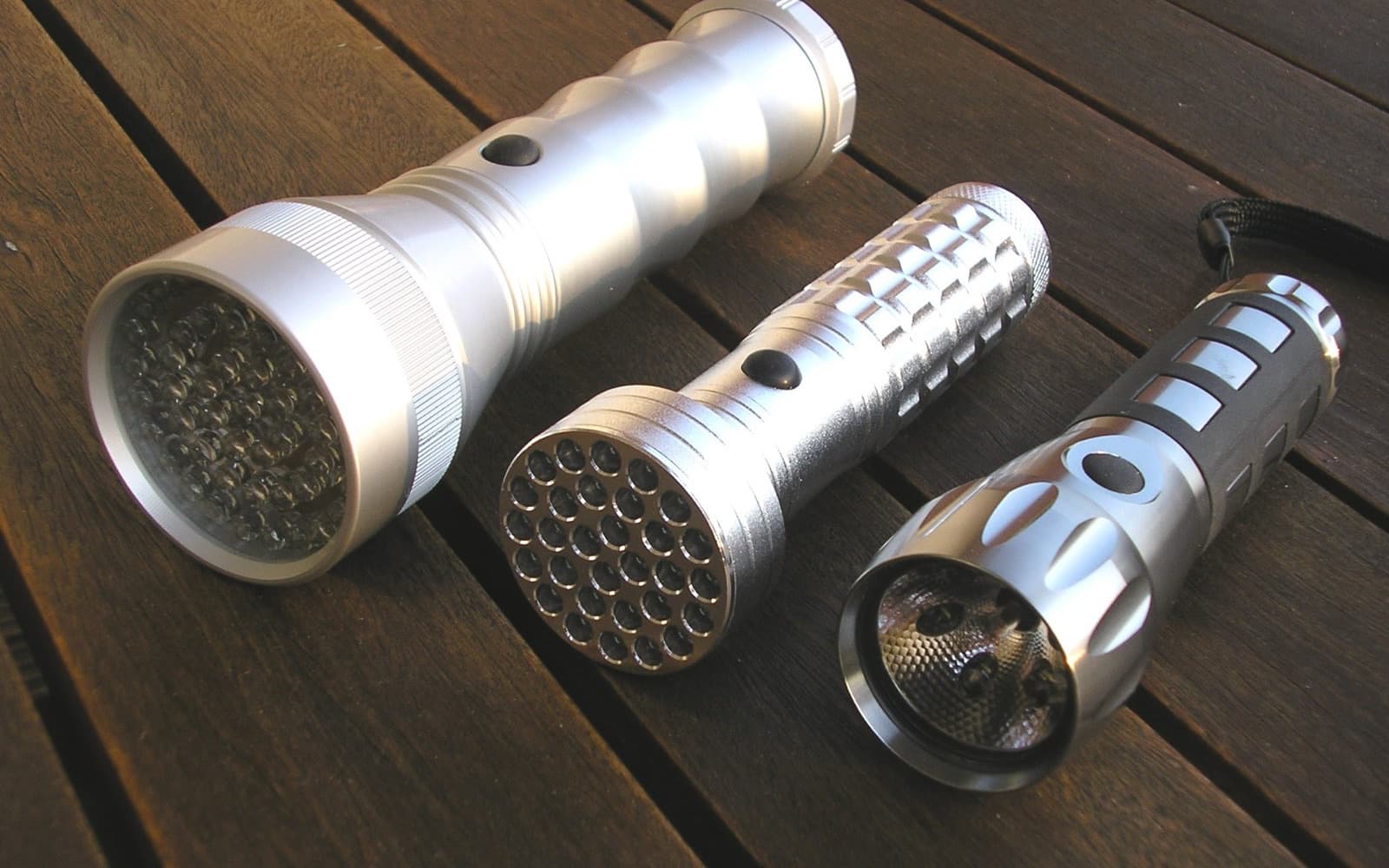
A headlamp and a handheld torch are not competing versions of the same thing, and the choice between them is mostly about whether your hands are busy. Beyond that, the number printed largest on the packaging is the one that tells you least. This piece is about what the other numbers mean, and which of them changes how the light feels in use.
Hands Free, or Hands On
A headlamp puts the beam where you are looking and leaves both hands free. That is the whole argument, and it is a strong one for walking, cooking, putting up a tent, or working under a car. The cost is that the light leaves from the same place as your eyes, so everything ahead is lit flat. Shadows fall away from you rather than across the ground, and shadow is exactly what tells you whether a rock is loose or a puddle is deep.
A handheld torch can be held low and off to one side, which restores those shadows and makes uneven ground legible again. It also throws further for the same power, because the reflector can be deeper. But you are holding it, which is fine until you need to open a gate.
Most people who spend real time in the dark settle on a headlamp as the default with a small torch as the second light. That second light matters more than either one's specification, because the failure you actually experience is not a dim beam, it is no beam.
Lumens Are a Sum, Not a Shape
Lumens measure the total light leaving the lamp and say nothing about where it goes. A lamp that spreads its output over a wide arc and one that concentrates it into a narrow cone can carry the same figure and be useless at each other's job.
What changes the experience is beam pattern: flood, spot, or some blend. Reach is described by candela, sometimes given as a beam distance in metres. Under the common testing convention, that quoted distance is the point at which the light on the ground has fallen to roughly the brightness of a clear full moon, which is the very edge of useful. Treat it as a way to compare two lamps, not as a description of how far you will see.
| Beam | Suits | The trade |
|---|---|---|
| Flood | Camp tasks, cooking, close work, running on smooth ground | Falls off quickly with distance; washes out in mist or falling snow |
| Spot | Route finding, spotting markers, scanning open ground | A bright disc surrounded by dark; tiring to walk with for long |
| Blend or dual | Most general use, most of the time | Neither extreme is as good as a lamp built only for it |
Two things matter more and are rarely printed. The first is beam quality: whether the fade from bright centre to dim edge is smooth, or whether there are rings and a hard cut-off your eye keeps fighting. The second is colour. A cool, blue-white beam flattens the difference between wet rock and dry; a warmer one looks weaker on paper and shows you more of what is there.
Reading the Runtime Figure
Runtime disappoints for a specific reason. The usual industry convention measures how long a lamp runs before its output falls to a tenth of what it started at. A lamp can therefore quote a long runtime on high while spending almost none of it near high.
Two behaviours are worth telling apart. A regulated lamp holds a chosen brightness steady, then drops sharply when the cell is nearly done. An unregulated one dims gradually from the moment you switch it on. Regulated is more pleasant, because the light does not quietly get worse without you noticing, but it gives less warning, so a usable battery indicator matters more there than anywhere else.
Then there is thermal step-down. A small lamp cannot shed the heat of its highest setting for long, so it drops output after a minute or two whatever the battery says. That is why the headline lumen figure should be read as a burst rather than a level. Ask instead what the lamp does on its middle setting, which is where you will spend your evening.
Rechargeable, Replaceable, or Both
This depends on where you use the light and whether you can plug it in.
- Built-in rechargeable. Lightest for the output, cheapest to run, nothing to buy. When it is flat and you are three days from a socket, it is an object. Check the port takes a standard connector rather than a proprietary cable.
- Removable rechargeable cell. The compromise worth paying for. You keep the running cost and the output, and you can carry a spare and swap it in the dark.
- Replaceable primaries. Cells you can buy anywhere, including at a petrol station at nine at night. Heavier, and a running cost you keep paying. In genuine cold, lithium primaries hold up far better than alkaline or lithium-ion, which is why winter lights so often still take them.
- Both. A few lamps take either a rechargeable pack or ordinary cells. Worth something if your use varies, at a little weight.
Two practical notes. Alkaline cells leak, and they leak in the light left in a drawer for a year, which is the one you reach for in a power cut: store an unused lamp with the cells out. And any lamp that travels loose in a bag needs a lock-out, or you will find it hot and empty at the bottom of your pack.
Red Light and the Other Modes
Red light preserves dark adaptation far better than white, because the eye's low-light receptors are much less responsive to long wavelengths. In practice you can read a map and still see the path afterwards. It is also considerate: in a shared tent, red is the difference between finding your socks and waking four people. Where it fails is judging colour, and anything at distance. A lamp whose red is bright enough to walk by has missed the point.
Worth having beyond that: a genuine low mode, because many lamps' lowest setting is still too bright for a tent; a memory that returns to the setting you last used rather than always starting on high; and a strobe you can ignore. Reactive dimming, where a sensor adjusts output to what you are looking at, is useful to some people and a source of constant unwanted change to others.
Water resistance is worth reading rather than assuming: the common ratings separate a lamp that shrugs off rain from one rated for temporary immersion, and rain is the ordinary case.
When the Cheap One Is the Right One
If your night use is a driveway, a bin, a loft and the occasional power cut, a simple lamp with a decent low mode and ordinary cells will serve for years, and everything above it is capability you are storing rather than using. The same goes for a torch kept in a car: what you want there is something that works after eighteen months of neglect, which argues against a sealed cell slowly discharging in the dark.
The case for spending more is narrow. It is long hours in the dark, cold that kills batteries, moving fast enough that reach matters, or work where the light failing is a real problem rather than an inconvenience. If none of those describe you, the change that improves your evenings is a second cheap light and a spare set of cells, kept where you will find them.
Almost nobody's night is improved by more lumens. It is improved by a lamp that sits comfortably enough to forget, has a low mode you can live with, and turns on when you press it.