The Buy Note
Some cheap things are cheap because they are simple. Others are cheap because the maker removed the part that makes the object work, and you find that out three months later. Below are everyday items where the second is usually true — and then the categories where the supermarket version is the right answer.
Nothing here has been bought, opened or tested. These are picks made from what each product is built out of and designed to do, and from its reputation — not from anybody here having owned one.
Zojirushi stainless steel vacuum bottles
Zojirushi makes vacuum-insulated stainless bottles and mugs, from a slim commuter mug up to larger bottles. Two things separate them from generic flasks. The interior is smoothly finished and coated rather than bare steel, so it picks up less staining from tea and coffee. And the lids are properly engineered: a gasketed stopper, a flip lid with a lock, and replacement gaskets sold as parts, which is what decides whether a flask lasts a decade or a season. Who it suits: anyone carrying a hot drink in the same bag as a laptop.
The weakness: the good lids are several small pieces, and to clean them properly you have to take them apart every time. Skip that for a few weeks and the gasket seat gets unpleasant. The narrow mouths on the mug shapes are also awkward to get a brush into.
Thermos Stainless King flasks
The Stainless King line is the traditional shape: a wide vacuum flask with a screw stopper you press to pour and an outer lid that unscrews to become a cup. It suits a shared flask of tea on a cold touchline rather than one person's drink at a desk, and the wide body holds heat longer than a slim one does, because there is less surface area per unit of volume. Who it suits: people pouring for more than themselves, or leaving a flask untouched for hours.
The weakness: it is bulky and heavy before you put anything in it, the wide versions do not fit most car cup holders, and the pour-through stopper has more internal parts than a plain screw cap.
| Slim insulated mug | Wide traditional flask | |
|---|---|---|
| Best at | One drink, carried and sipped | A larger volume, hot for hours |
| Fits | Bag pockets, cup holders | Rucksack main compartment |
| Drinking | From the bottle | Poured into the lid-cup |
| Cleaning | Narrow mouth, fiddly | Wide mouth, easier |
OXO Good Grips peelers and kitchen tools
OXO's whole premise is the handle. Good Grips was designed around making tools usable by people with weak grip or arthritis, and the fat, soft, slightly ribbed handle is the point of the object rather than decoration. The swivel peeler is the clearest example: a sharp, freely pivoting blade on a handle you can hold with wet hands and no force. Who it suits: anyone who cooks often, and anyone with hand pain.
The weakness: the soft handle material can go tacky after years, especially near cooking oil or through repeated hot dishwasher cycles. The handles are also bulky, and a drawer of OXO tools takes up noticeably more room than the same tools with thin metal handles.
Fiskars scissors
The orange-handled scissors Fiskars has made for decades are the default for a reason. The blades are stainless with a proper grind, the handles do not bend under load, and the pivot stays tight — which is the thing that actually fails on cheap scissors. They do not go blunt so much as go loose, and loose blades chew paper instead of cutting it. Who they suit: general household and craft cutting, where one pair does everything.
The weakness: the moulded handles are hard, and long cutting sessions are less comfortable than with a softer-handled pair. They are also not made to be taken apart and sharpened at home, so when they dull, the answer is replacement, not repair.
Lodge cast iron
Lodge sells pre-seasoned cast iron skillets in the usual sizes, made in the United States. The case is simple: cast iron is old, unpatented technology, and a heavy pan with thick walls will outlive you. The seasoning is polymerised oil, so a scratched or stripped pan is fixable at home with oil and heat, which is not true of any nonstick coating. Who it suits: searing, cornbread, anything that starts on the hob and finishes in the oven.
The weakness: the cooking surface is left rough from the sand casting rather than machined smooth, so food releases less readily at first than on older polished pans or the machined ones from other makers. It is also heavy, and cast iron conducts heat poorly, so it is slow to come up to temperature and holds hot spots if you rush it.
Sharpie permanent markers
Alcohol-based ink, writes on plastic, metal, tape, cardboard and skin, dries almost immediately. For labelling anything that is not paper this is the tool, and the cheap equivalents mostly differ in how fast the tip mushrooms and how soon they dry out.
The weakness: on paper it bleeds through anything thinner than card, and the ink is not archival — leave a label in a sunny window and it will shift colour and fade. It is a marker, not a pen.
Uni-ball pens
The useful thing about Uni-ball's pigment-ink pens, in both the gel and rollerball families, is that the colourant is a suspended pigment rather than a dye. Pigment lodges in the paper fibres and resists water and fading in a way dye ink does not, which is why these pens turn up wherever a signature has to survive.
The weakness: they lay down a wet line — longer dry time, smudging under the heel of the hand, which is a real problem for left-handers, and show-through on thin paper. A ballpoint is better for fast notes on cheap pads.
Leuchtturm1917 against Moleskine
Both are hardback, both have an elastic closure, a ribbon and a back pocket, and both come in the same familiar sizes.
| Moleskine | Leuchtturm1917 | |
|---|---|---|
| Pages | Plain, unnumbered | Numbered, with blank index pages at the front |
| Extras | Ribbon, pocket | Two ribbons, labelling stickers |
| Wet ink | Feathers and shows through | Better, not immune |
| Weakness | The paper | Costs more for the same page count |
The Moleskine's weakness is its paper, which feathers under wet ink. The Leuchtturm's is that it costs more for the same page count, and its paper still ghosts with a broad nib. If you write in pencil or ballpoint, either is fine.
Where the cheap one is genuinely fine
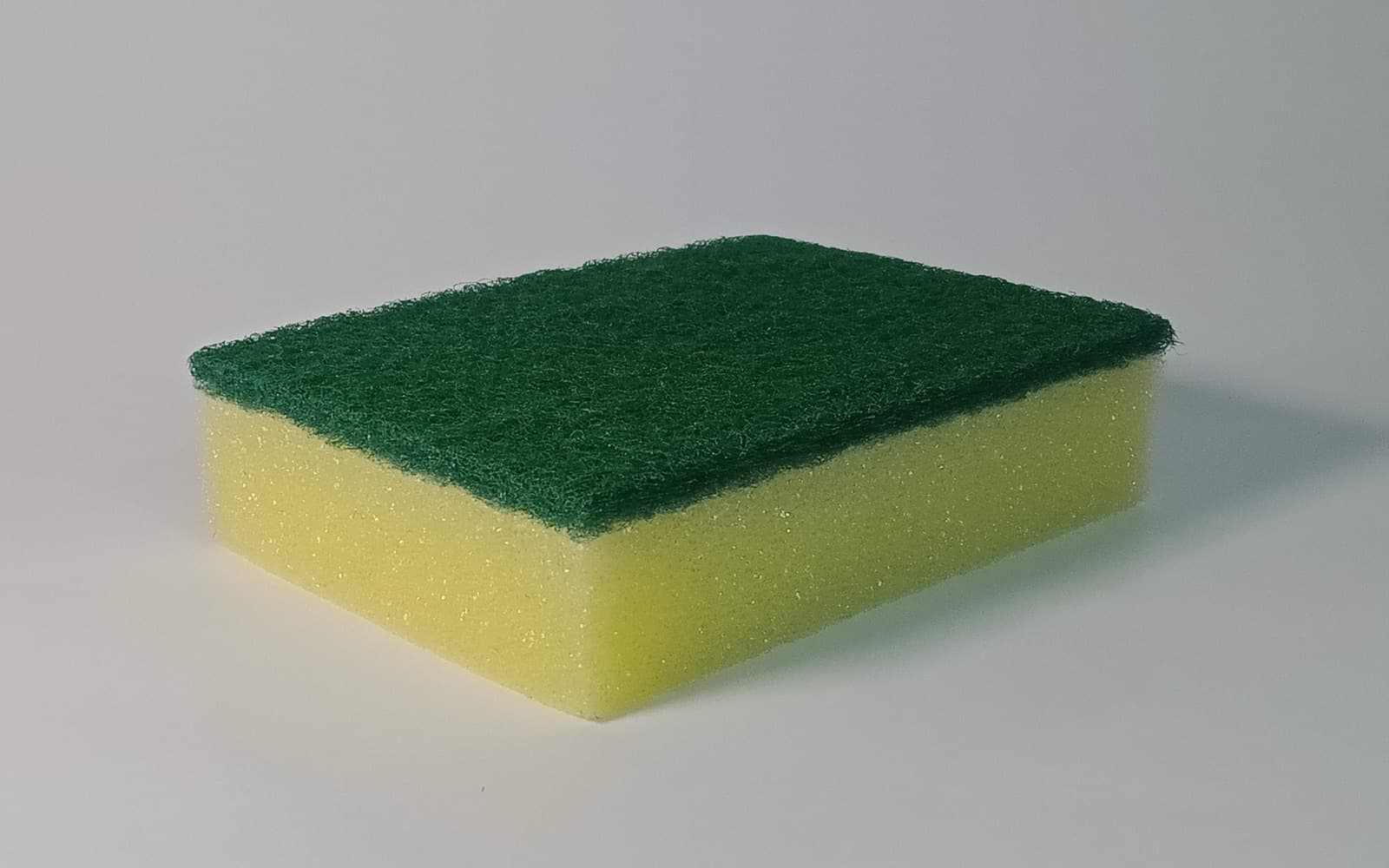
Plenty of things do not reward spending. Wooden spoons are wood. Dish sponges are consumables and the branded ones wear out on the same schedule. Plastic tubs, tea towels, bin bags, clothes pegs, ice cube trays, mixing bowls, alkaline batteries in a remote control, a scratch pad you will throw away — all of these fail gracefully and cheaply, and paying more mostly buys packaging.
The test is what failure costs. A sponge that gives up is a sponge. A flask that leaks in a bag, scissors that slip, a peeler that needs force near your knuckles — those failures are expensive, painful or messy, and that is where the durable version earns its keep.
Who should buy none of these
If you do not currently own the cheap version, do not start here. Almost everything above is a replacement purchase, and the honest way to find out whether you need a good one is to wear out a basic one and notice what annoyed you. Someone who drinks their coffee at home needs no flask at all. Someone who cooks twice a week does not need cast iron, and a light pan they will actually lift out of the cupboard will feed them better.
Buying the durable version of something you do not use is not thrift either. It is shopping with a good story attached. The saving only exists if you would otherwise have bought the cheap one repeatedly.