The Buy Note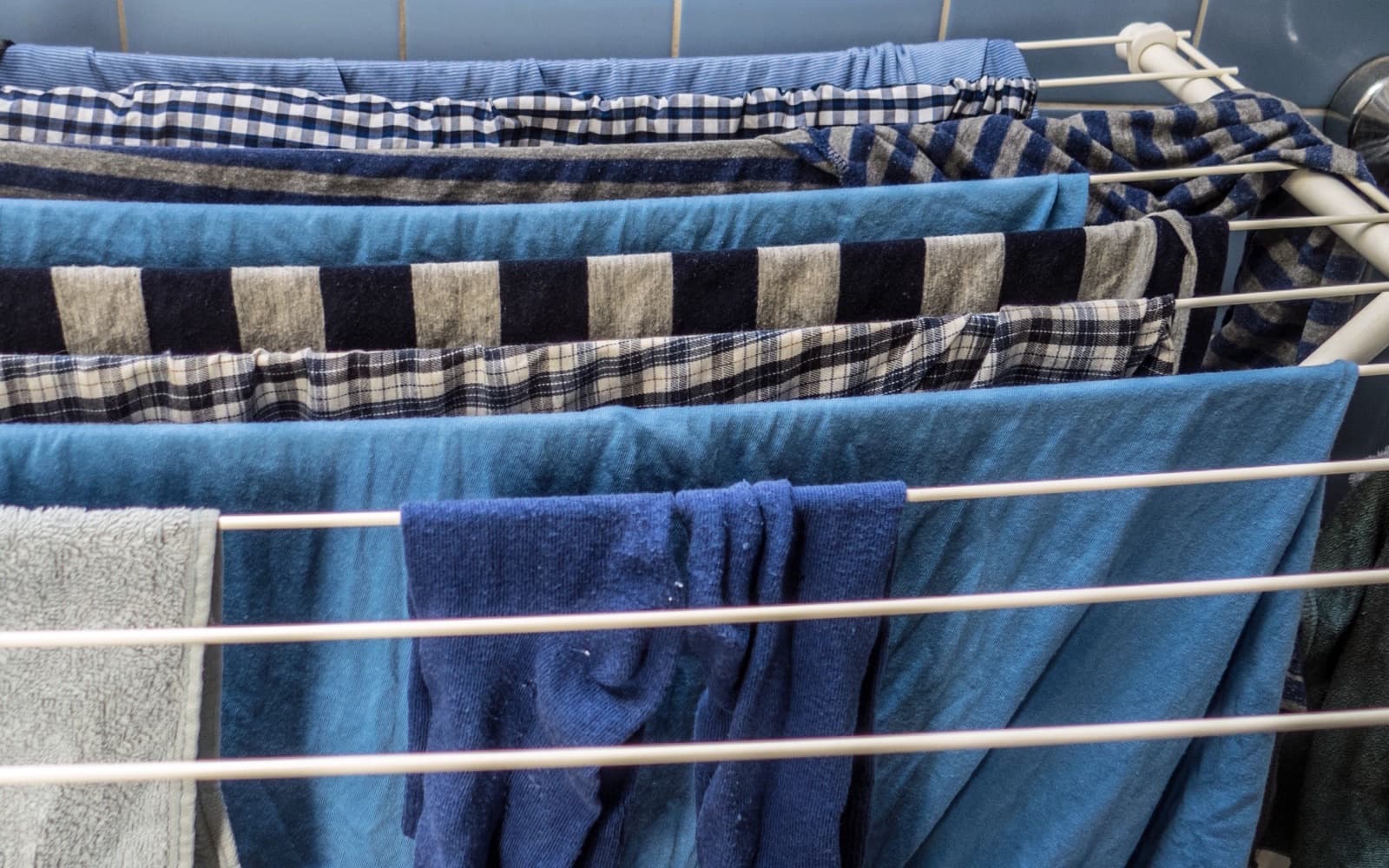
Most laundry equipment is bought once, badly, and then lived with for years. Two items in this list repay attention, one is genuinely disposable, and the iron-versus-steamer question has a clear answer that depends entirely on what you wear. Here is where the money goes further, and where it does nothing at all.
The drying rack is the one that earns the money
If you dry clothes indoors regularly, the rack is the item to spend on. It is in use several times a week, it holds wet weight, and the cheap ones fail in ways that are quietly annoying long before they break.
The failure modes are consistent. Thin steel tube coated in white enamel chips at the joints, and the exposed metal rusts and marks pale fabric. Plastic hinges go loose, so the frame leans instead of standing square. Rails set too close together mean two shirts touch, so nothing dries and everything smells faintly of damp by the second day.
What separates a rack that lasts from one that does not:
- Rail spacing. Air has to move between garments. Rails set close together give an impressive capacity figure on the box and dry nothing.
- What the frame is made of. Aluminium does not rust. Coated steel does, at every chip. Stainless steel sits between them and is heavier.
- How it stands when loaded. Wet denim is heavy and lands on one side. A rack that needs careful balancing gets tiresome fast.
- Whether it folds flat enough to store. A rack that lives permanently open in a small flat is a rack you will resent.
Winged and tiered designs give more rail length in the same footprint, at the cost of stability and a more fiddly fold. A plain flat rack with generous spacing beats a clever one with rails an inch apart.
Hampers: ventilation beats good looks
A hamper holds damp towels and worn gym kit in a warm room. Ventilation is the whole specification, and it is the thing most attractive hampers get wrong.
Sealed plastic bins and lined canvas boxes trap moisture against fabric, and that is where the musty smell in a laundry pile comes from. Open weaves, slatted sides and mesh panels let air through, so clothes reach the machine no worse than they went in.
| Woven or slatted | Fabric on a frame | Sealed plastic bin | |
|---|---|---|---|
| Airflow | Good throughout | Good only if the fabric is mesh or open weave | Poor |
| Weight when full | Moderate | Light | Heavy and awkward |
| Cleaning | Wipe or vacuum; hard to wash properly | Removable liners wash in the machine | Wipes clean easily |
| Common failure | Weave snags and unravels at a corner | Frame joints loosen, fabric sags | Cracks at a stress point, usually a handle |
The detail worth caring about is the liner. A removable, washable liner is what makes a hamper cleanable, and a hamper you cannot clean eventually becomes the thing that smells. Two smaller hampers also beat one large one in most homes, because a single full basket is heavy enough that people stop carrying it and start piling clothes on the floor beside it.
Mesh bags are cheap, and that is correct
Mesh bags are the clearest case on this page for buying the inexpensive version. They are consumable. The zip pull breaks, the mesh snags, and after enough cycles you replace them without thinking about it.
They do earn their place, but only for a narrow set of items. Bras keep their shape and their hooks stay out of other people's knitwear. Tights and thin socks stop disappearing inside duvet covers and cuffs. Anything with long ties or drawstrings stops tangling itself around the drum's fins.
Two things matter more than price. A zip that folds under a flap will not scratch the drum or catch on fabric. And a bag should be filled loosely, roughly half full, because a tightly packed bag stops water and detergent reaching what is inside.
Hangers, and the bump in the shoulder
Hangers are where quiet damage happens. Wet or heavy garments hung on a narrow hanger develop a bump at each shoulder, because all the weight is bearing on one small point of the seam.
The fix is width and shape, not material. A broad hanger with a gentle curve follows the line of a shoulder and spreads the load. Wooden hangers are usually broad, which is why they have the reputation, but a wide moulded plastic hanger does the same work.
Where the material does matter is friction. Velvet-flocked hangers grip, so wide necklines and silk camisoles stay put instead of pooling on the wardrobe floor. They are also thin, so they suit shirts and knitwear rather than coats. A wardrobe usually wants a few broad hangers for jackets and coats, and thinner grippy ones for everything else. A matched set of one type is a decorating choice, not a functional one.
Iron or steamer
This depends on what you wear, and the honest answer is that most people no longer need an iron.
A steamer relaxes wrinkles in fabric that is hanging up. It is fast, it needs no board, and it handles the common weekday problem of one creased shirt. It suits jersey, wool, synthetics and anything you would not want to press a hot plate onto. It cannot produce a crease, flatten a collar or cuff, or press a seam open.
An iron applies heat and pressure to fabric lying flat. That combination is what makes a sharp collar, a trouser crease and a flat seam. If you wear tailored cotton shirts, sew, or quilt, nothing else does that job. The cost is the setup: a board, a surface to put it on, and time.
If you buy an iron, weight and soleplate matter more than wattage claims. A heavier iron does more of the work for you. If you buy a steamer, water tank size and heat-up time decide whether it gets used, because a steamer that takes several minutes to be ready will lose to the shirt you decide is fine as it is.
When the cheap option is right
If you own a tumble dryer, wear mostly knitwear and jersey, and have never ironed anything, almost nothing on this page applies to you. Buy the cheap hamper you like the look of, use the hangers that came with the wardrobe, and stop.
The rack is the only item worth real attention for most people, and only if you dry indoors. Mesh bags should always be cheap. Hangers matter only for garments with structure — jackets, coats, tailored shirts — and not at all for a wardrobe of t-shirts. The iron is worth owning only if you can name the last thing you needed a sharp crease on.
The general shape of it: spend where an item carries weight or handles moisture, and buy the cheapest acceptable version of everything else.