The Buy Note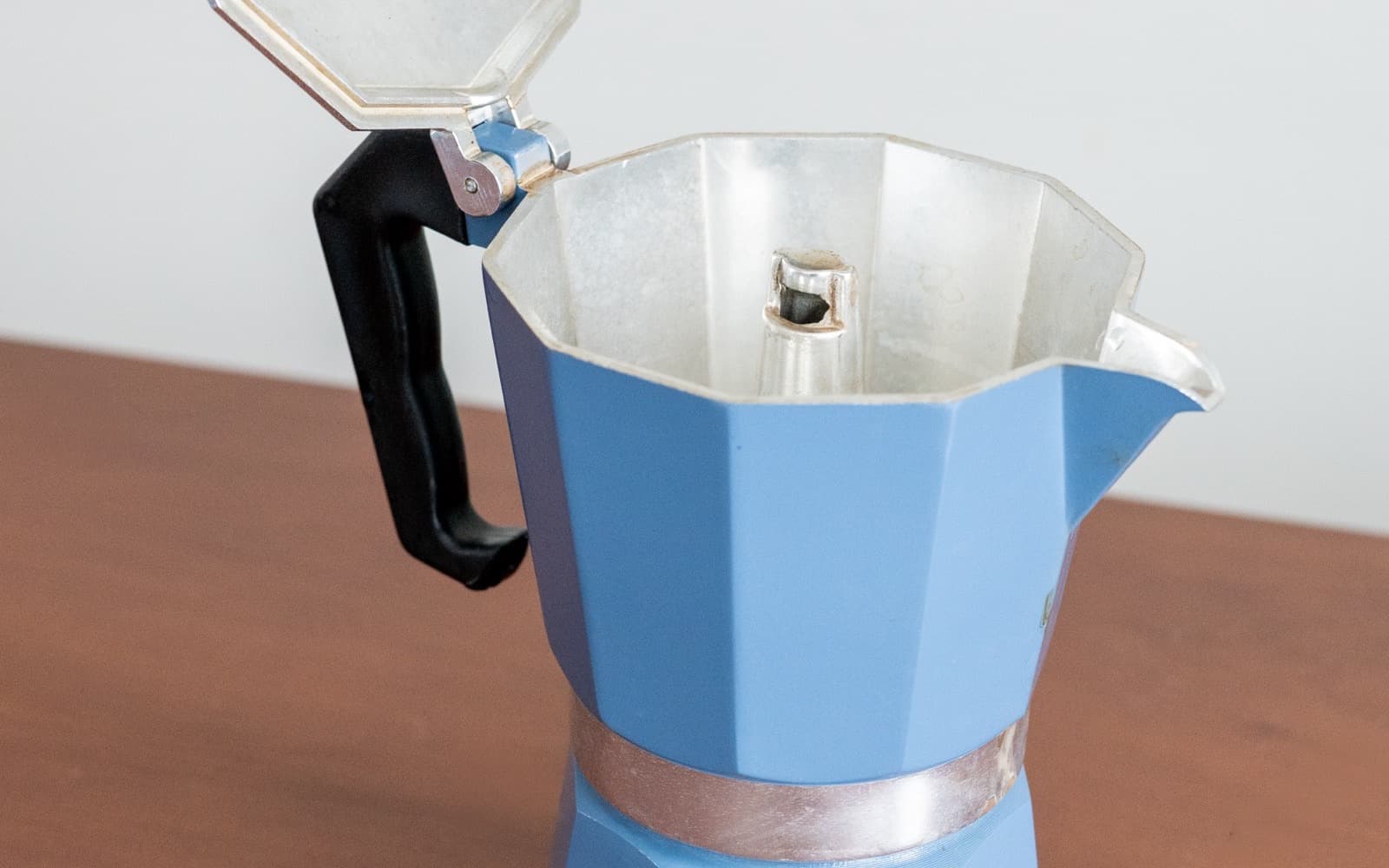
The brewer you choose decides two things: how much attention your morning has to give, and how the cup reads in the mouth. It decides much less about quality than most buying guides suggest. If the coffee is being ground badly, or was ground weeks ago in a factory, all four methods below produce roughly the same flat cup, and the honest advice is to fix the grind before changing the brewer.
What each method is actually doing
Two mechanisms cover all four. Immersion means the grounds sit in the water for a set time and are then separated from it. Percolation means the water passes through a bed of grounds once and leaves.
A French press is immersion. Coarse grounds steep in the pot for around four minutes, then a metal mesh plunger pushes them down. Because the mesh is metal rather than paper, the oils and the finest particles stay in the cup.
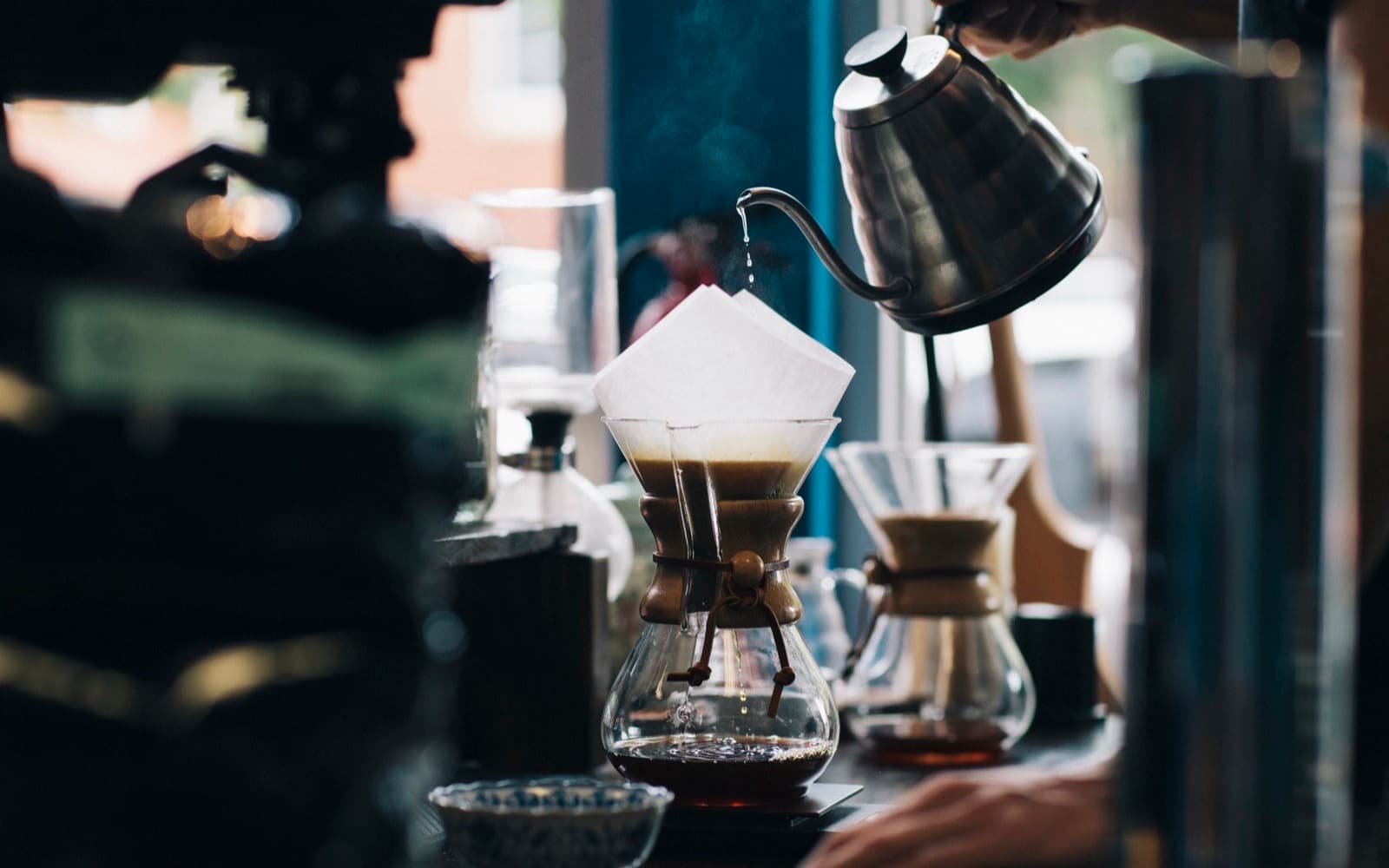
A pour-over is percolation. You pour hot water over medium-fine grounds sitting in a paper filter, in stages, over roughly three minutes. The paper traps oils and fines, which is why the cup looks clear and tastes cleaner and lighter.
A moka pot is pressure-driven percolation. Water in the base boils, steam pressure forces it up through a fine-ish grind, and it arrives in the top chamber as something small and concentrated. It is not espresso: a moka pot works at roughly a bar or two of pressure, against around nine for a real machine.
A drip machine is a pour-over that pours itself. Same paper filter, same principle, with a heating element and a shower head deciding the water temperature and how it lands.
The attention each one demands before you have had any coffee
This is the axis most people actually choose on, and it is worth being honest about your own morning rather than the morning you would like to have.
| Method | Hands-on time | What it will not forgive | Cleanup |
|---|---|---|---|
| French press | Two minutes, mostly waiting | Grinding too fine, which makes the plunge hard and the cup muddy | Wet grounds out of the pot; the worst of the four |
| Pour-over | Three to four minutes, standing over it | Pouring too fast or all at once | Lift the filter, bin it, rinse |
| Moka pot | Five minutes, near the hob | Walking away; it will boil dry and scorch | Three parts to dry, and the gasket to check |
| Drip machine | Thirty seconds and a button | A carafe left on a hot plate | Filter out, carafe washed |
The drip machine wins that column outright, which is why it stays in kitchens where the other three end up in a cupboard. The pour-over asks the most of a person who is not yet awake. The French press asks the least during brewing and the most afterwards, which is a trade many people get wrong when they buy one.
Why the grinder is the decision that matters
A blade grinder chops. It produces some dust and some boulders in the same batch, and there is no setting that changes this. In the brewer, the dust over-extracts and turns bitter while the boulders under-extract and turn sour, and you drink both at once. That is the taste people usually blame on the beans.
A burr grinder mills between two surfaces set a fixed distance apart, so the particles come out closer to one size. That consistency is what lets a method work as designed: a coarse, even grind for the press, a medium-fine one for pour-over, finer again for a moka pot.
A hand grinder with steel burrs will out-perform most cheap electric grinders, at the cost of a minute of cranking per dose. That minute is the real question. If you make two cups a day, it is nothing. If you make six, or if someone else in the house also wants coffee, it becomes the reason the whole ritual dies by March.
If you are only going to change one thing, change the grinder. A modest brewer with a good grind beats a good brewer with a bad one, consistently.
Where the differences show up in the cup
- French press: heavier body, more texture, a little sediment at the bottom. Suits darker roasts and people who take milk. Flatters coffee that is not especially fresh.
- Pour-over: clearer, lighter, more separation between flavours. Suits lighter roasts and single origins where you want to taste what is distinctive. Exposes stale beans mercilessly.
- Moka pot: strong, concentrated, slightly heavy. Good as a base for milk drinks. Rewards a dark roast and punishes a hot hob.
- Drip machine: closest to pour-over in character, with the variation ironed out. A good machine gets close to a careful pour-over; a poor one never gets the water hot enough and produces something thin no bean can rescue.
Matching the brewer to the household
One person, one or two cups, patient in the morning: pour-over. It gives the most control for the least equipment, and the whole setup fits in a drawer.
Two or three people wanting coffee at the same time: a drip machine or a large French press. Making four pour-overs in sequence is a chore nobody sustains.
Someone who wants a small strong coffee, often with milk, and likes standing at the hob: moka pot. It also travels well, has nothing electrical to fail, and lasts decades if the gasket is replaced.
Someone who wants coffee to be automatic: a drip machine with a thermal carafe rather than a hot plate. A hot plate keeps cooking the coffee it has already made, which is why the second cup from a cheap machine tastes worse than the first.
When the cheap option is the right one
If your honest morning is a mug drunk half-cold while you find your keys, a good brewer is money spent on an experience you are not having. A basic drip machine and a bag of whole beans ground fresh at the shop each week will serve you better than anything more considered.
Skip all of this if you drink one cup a day and take it with a lot of milk and sugar. The differences described above live in the parts of the cup that milk and sugar cover. A press or a cheap drip machine is genuinely enough, and the money is better spent on beans that were roasted recently.
And if you already own a brewer you are not thrilled with, do not replace it yet. Buy fresher beans, grind them yourself, check that your water is hot but not boiling, and see whether the brewer was ever the problem. Often it was not.