The Buy Note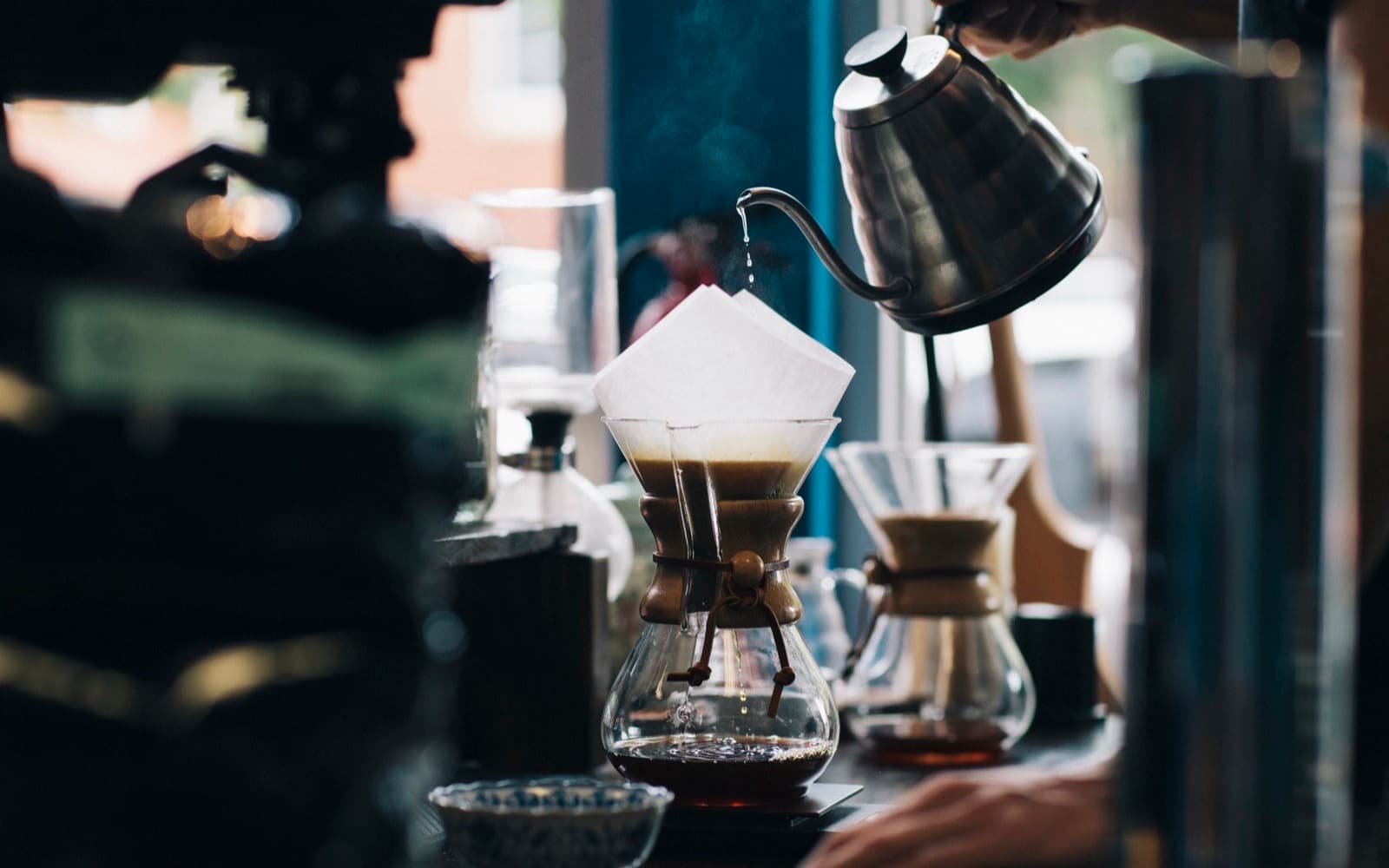
Buy the grinder first. If you are grinding fresh and evenly, all five of these brewers make good coffee, and the real difference between them is how much of your morning they ask for — two minutes of nothing, or five minutes of attention. Pick the one that matches the morning you actually have, not the one you imagine.
Nothing here has been bought, opened or tested. These are picks made from what each product is built out of and designed to do, and from its reputation — not from anybody here having owned one.
Bodum Chambord French Press
The one that asks least of you. The Bodum Chambord is a borosilicate glass beaker in a stainless steel frame, a lid, and a plunger with a metal mesh disc. Coarse grounds in, hot water on top, leave it around four minutes and press. There is no technique to learn beyond the timing.
Because the filter is metal rather than paper, oils and the finest particles stay in the cup. That gives a heavy, rounded body and a slightly cloudy look, which is either exactly what you want or exactly what you do not. It suits somebody making two or more mugs while doing something else, and Bodum sells replacement beakers, which matters more than it sounds.
The weakness: silt. However carefully you press, fine particles pass the mesh and settle in the mug, and the last inch is gritty. The plunger has to come apart to clean properly, and the glass beaker breaks if you knock it into a tap.
Bialetti Moka Express
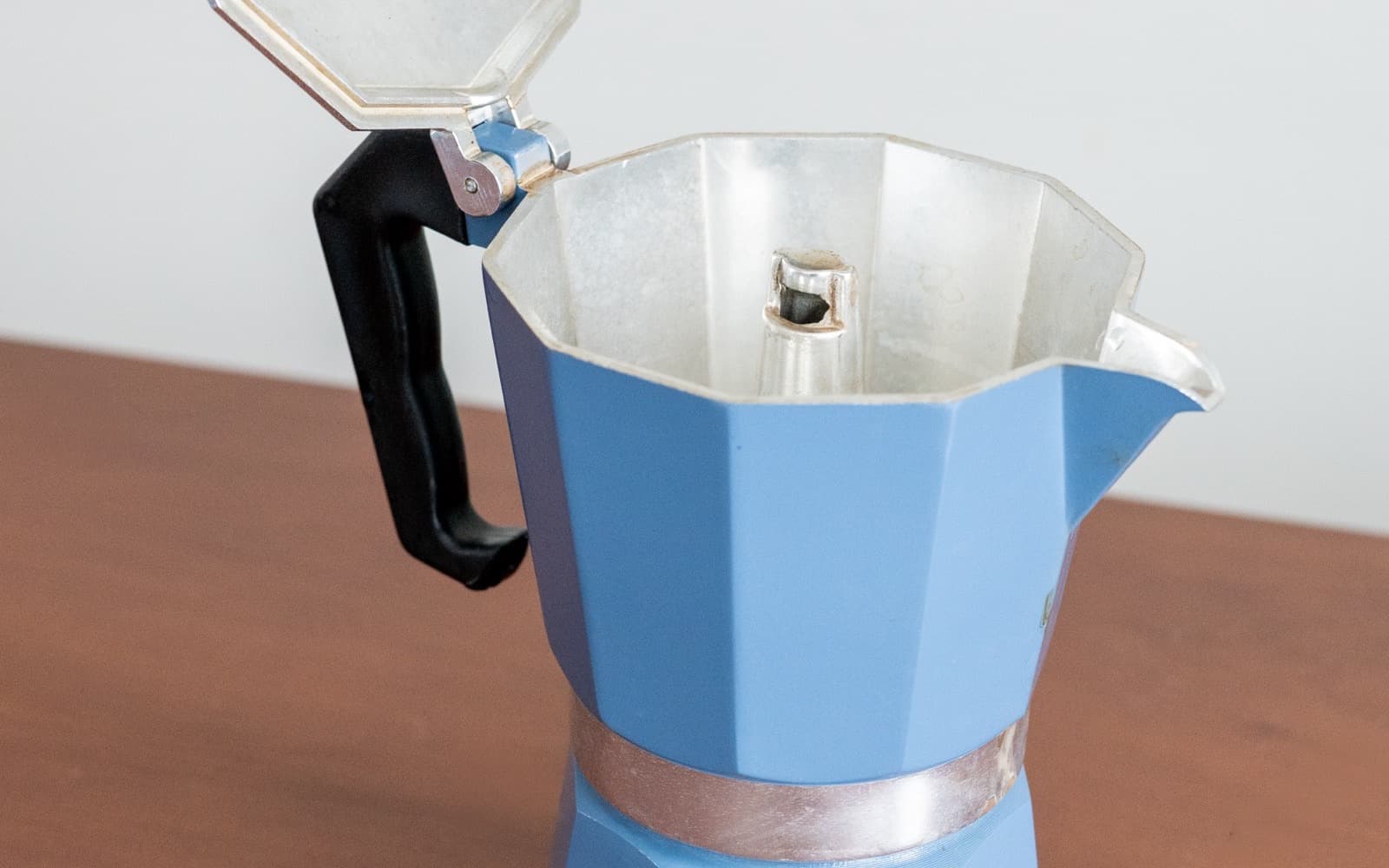
The Bialetti Moka Express is the octagonal aluminium stovetop pot, essentially unchanged since the 1930s. Water in the bottom chamber, a fine-ish grind in the basket, and heat does the rest: steam pressure pushes water up through the coffee into the top chamber. Once it is on the hob you do nothing.
It is not espresso. A moka pot works at roughly a bar or two of pressure against about nine in a real machine, so you get intensity without crema or that syrupy texture — its own drink, usually taken with hot milk. It suits somebody who wants a small strong cup and likes a stovetop ritual, and it is sold in several sizes.
The weakness: it only makes the amount it was built for. Half-filling a six-cup pot gives a poor result, so the size you buy is the size you drink, every time. The rubber gasket hardens and needs replacing every year or two, the aluminium should not go in a dishwasher, and the standard model will not work on induction.
AeroPress
The AeroPress is a polypropylene tube, a plunger with a rubber seal, and a small paper filter in a screw-on cap. You steep for a minute or two, then push it through. Immersion and pressure at once, which is why it forgives you: the grind can be off, the water a little cool, and the cup still comes out drinkable.
It is the most portable brewer here, and cleanup is one push of the plunger into a bin. It suits somebody making a single mug, somebody who travels, and anybody put off pour-over by the fuss.
The weakness: one mug at a time, and not a large one — three cups means three brews. It uses its own small paper filters, so you are tied to a consumable, and it looks like lab equipment on a counter.
Hario V60
The Hario V60 is a cone with a sixty-degree angle, spiral ribs up the inside and one large hole at the bottom. That single big opening is the point: the V60 does not control the flow for you, so grind size and the speed of your pour decide how long water spends in the coffee. It comes in sizes 01, 02 and 03, and in ceramic, glass, plastic and metal.
The paper filter traps oils and fines, so the cup is clear and tea-like, and separates into distinct flavours in a way the French press never does. It suits somebody who enjoys three minutes of doing one thing carefully. Choose plastic if it will travel, ceramic if it lives on a counter.
The weakness: it is unforgiving. A rushed pour or a stale grind gives a thin, sour cup, and it rewards a gooseneck kettle and a scale — two more purchases. Ceramic also chips at the rim and pulls heat from the water unless you rinse it hot first.
Chemex
The Chemex is one piece of borosilicate glass in an hourglass shape, with a wooden collar and a leather tie at the waist. Brewer and carafe in one object, which is why people leave it on show.
The filters are the real difference. Noticeably thicker than ordinary cone filters, they strain out more oil and more sediment and slow the brew down, giving the cleanest cup on this page — bright, light-bodied, almost translucent. It also makes enough for a table, which nothing else here except a large French press does.
The weakness: it is the fussiest thing here. Those thick filters cost more than standard ones and are bulky to store. Washing means a brush down a narrow neck, with the collar off before the wood soaks. It is glass with no frame around it, so a hard knock ends it.
How they compare
| Morning attention | Body in the cup | Cleanup | |
|---|---|---|---|
| French press | Low — steep and press | Heavy, oily, some silt | Awkward; mesh unscrews |
| Moka Express | Low once on the hob | Concentrated and strong | Easy, hand-wash only |
| AeroPress | Low — forgives mistakes | Medium, clean | Easiest here |
| V60 | High — technique matters | Light and clear | Bin the filter |
| Chemex | Highest — slow by design | Lightest and cleanest | Fiddly |
Hario Skerton Plus
The Hario Skerton Plus is a hand grinder with conical ceramic burrs, a glass jar for the grounds and a crank on top. Ceramic burrs do not rust and hold an edge for years. The Plus version added a stabilising bearing at the top of the shaft — the fix for the original Skerton's well-known problem of the burr wandering at coarse settings. It is a sensible first grinder for a French press or a moka pot, and costs less than most steel-burr alternatives.
The weakness: the adjustment sits under the burr assembly, so changing it means taking the handle and top burr off and counting turns on an unmarked nut. Switching grinds daily is genuinely annoying, and it is slow: a full French press worth of beans is an arm workout.
Timemore Chestnut C2
The Timemore Chestnut C2 is an aluminium-bodied hand grinder with stainless steel conical burrs. Steel cuts faster than ceramic and grinds more uniformly, particularly in the medium-fine range that pour-over and the AeroPress want, with less effort per turn. Adjustment is by clicks on a dial you reach without dismantling anything, so moving between brewers takes seconds. It is the one to get if you own a V60 and care what the coffee tastes like.
The weakness: the hopper is small — roughly a single mug's worth of beans, so a full French press means grinding twice. The clicks are not labelled with grind sizes, so you keep your own note of which number suits which brewer. For espresso-fine work it is out of its depth.
When none of these is the right answer
If your morning has ninety seconds in it and coffee is a means to an end, do not buy any of this. A basic drip machine with a timer is a pour-over that pours itself, and a decent one makes a better cup than a V60 used badly at speed. The best brewer is the one you will still be using in a year.
If you already own a French press that works, a new brewer will change less than a bag of freshly roasted beans, and a grinder will change more than either. And if you only make coffee for guests twice a year, a plain plastic cone and supermarket filters will do — no generic cone is meaningfully worse at holding a paper filter over a mug.
The one place not to economise is the grinder, because it is the only item here whose failure you cannot taste your way around.