The Buy Note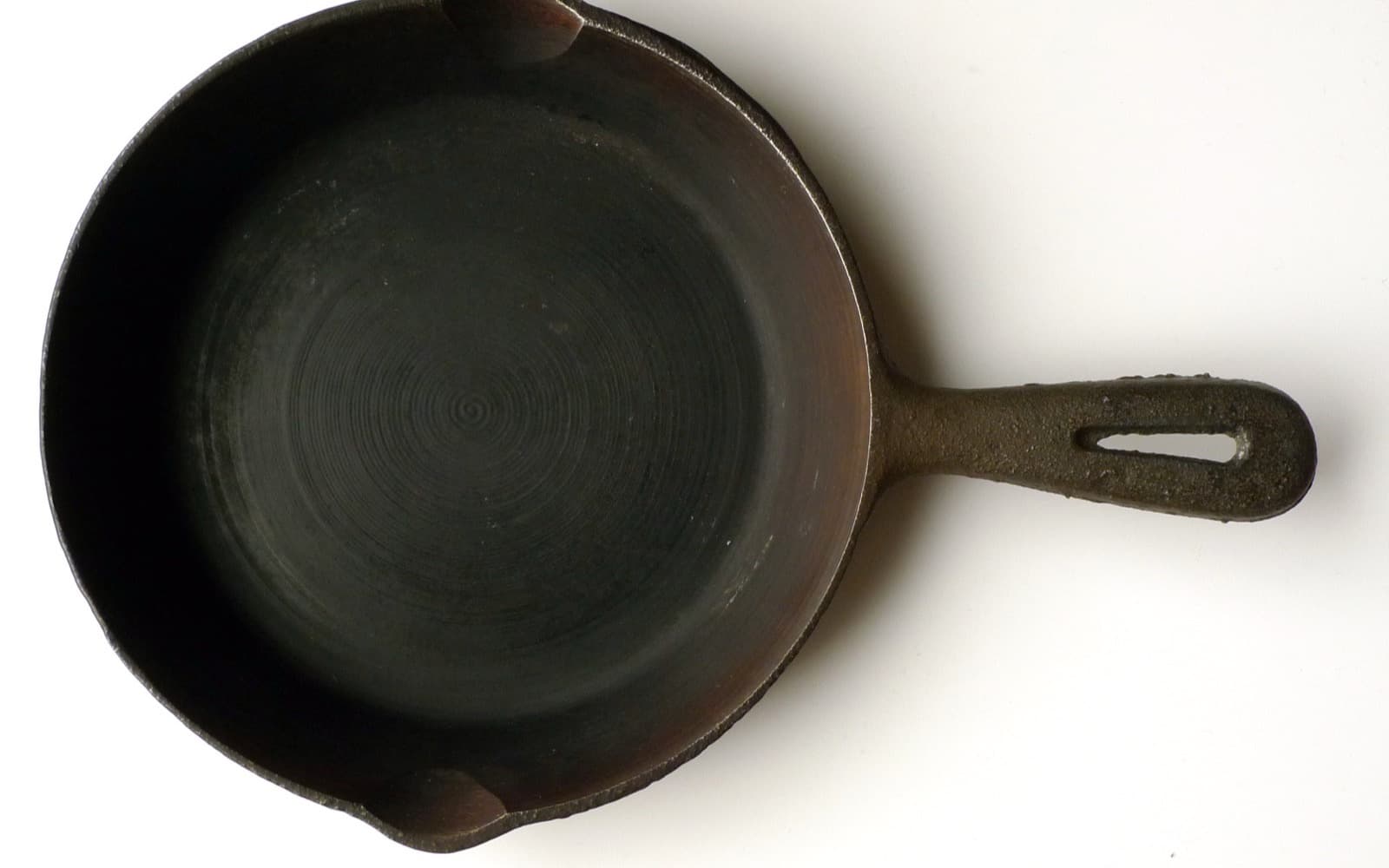
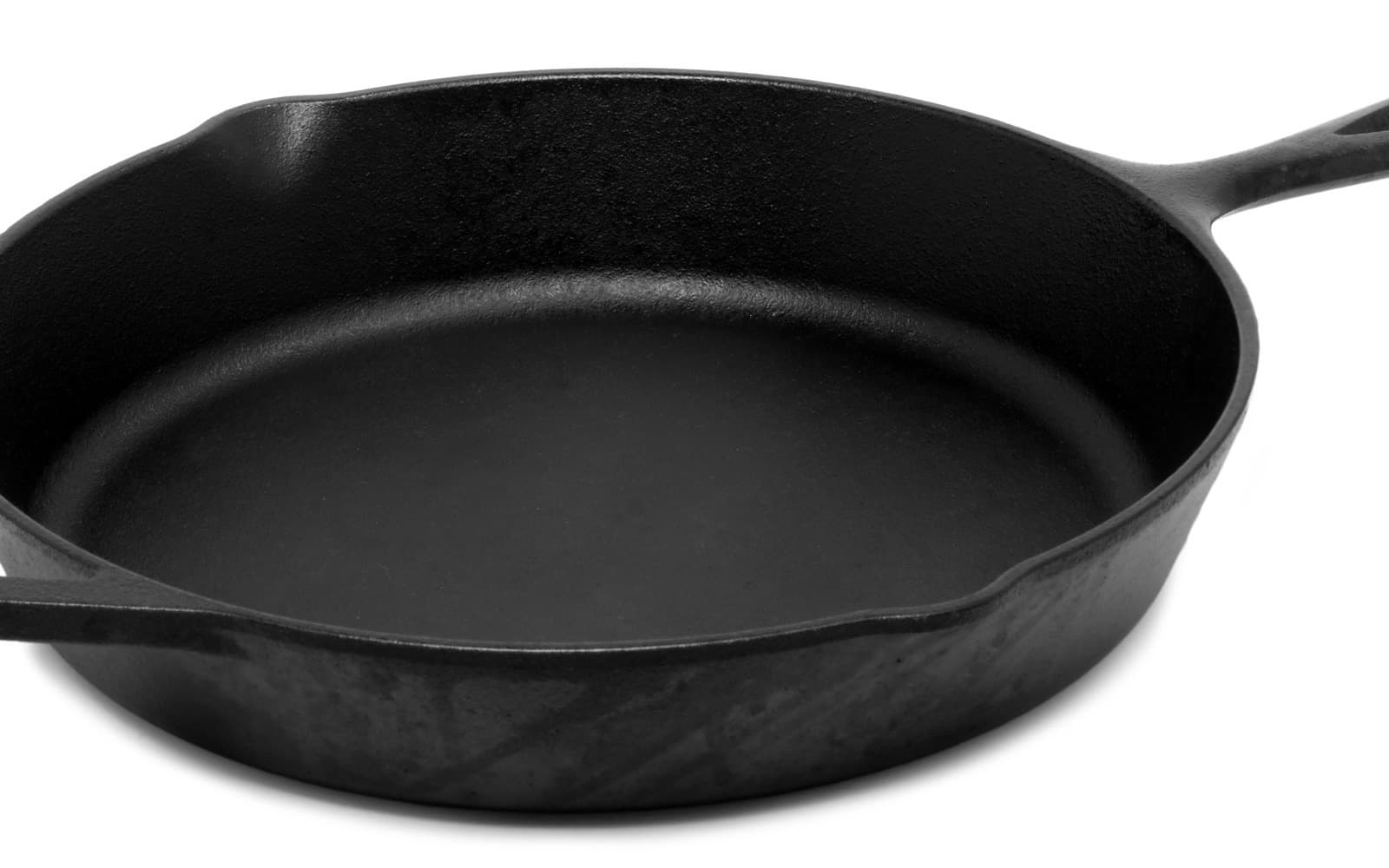
A cast iron skillet is one of the few pans where the buying decision is mostly about your arm, your hob and your patience, not about the metal. Nearly all bare cast iron is the same material poured into slightly different moulds, and the meaningful differences are size, weight, surface finish and handle. This guide is about picking the one you will keep using, and about which parts of the seasoning folklore you can safely ignore.
Start with the size you will actually lift
Skillets are sold by the diameter across the top rim, which is not the cooking surface. The sides slope, so a pan sold as 12 inches gives you something closer to 9 or 10 inches of flat bottom. If you have been cooking in a nonstick pan of a stated size and want the same working area, you need to go up.
Three sizes cover almost everything:
- 8 inches or so. One or two eggs, a single chicken thigh, toasting spices, cornbread for two. Light enough to use one-handed and to flip food in. It is a genuinely useful second pan and a frustrating only pan.
- 10 inches or so. The default. Two steaks, a chopped onion with room to move, a small roast chicken finished in the oven. This is the size most people should buy first.
- 12 inches and up. Feeds four properly and browns rather than steams, but it is heavy loaded, it will overhang a small burner, and lifting it full from a hot oven with one hand is not something to plan on.
| Size | Suits | Rough loaded weight | Main drawback |
|---|---|---|---|
| ~8 in | One or two portions, eggs, sides | Light; easy one-handed | Too small for a main meal |
| ~10 in | Most cooking for one to three | Manageable two-handed | Crowds at four portions |
| ~12 in | Four portions, whole birds, big sears | Heavy full; awkward from the oven | Overhangs small burners |
Weight is the specification nobody prints on the box. Empty, a 10-inch skillet usually weighs somewhere around five pounds on the scale, and a 12-inch nearer eight; add a chicken and you are lifting that one-handed, at arm's length, out of a hot oven. Thickness is not wasted, because heavy iron holds its temperature when cold food hits it, and that is the whole reason it sears better than a thin pan. But if you have wrist or shoulder trouble, or you cook mostly for one, a lighter pan you use daily beats a heavy one you resent.
Rough finish, machined finish, and what pre-seasoned means
Most affordable cast iron comes out of the sand mould with a slightly pebbled surface. Some pans are machined or polished smooth afterwards, and those cost more. The smooth surface releases food better early on, before any seasoning has built up. Over months of cooking, the gap narrows as the rough pan fills in — but "over months" is doing real work in that sentence, and if you want eggs to slide next week rather than next winter, the smoother pan is worth paying for.
Pre-seasoned means the factory sprayed oil on and baked it. It is a rust-prevention measure and a starting layer, not a finished nonstick surface. A bare, unseasoned pan is perfectly viable and takes about an hour of your time to start; it is mostly sold to people who want to control the process. Neither choice locks you into anything, because seasoning is not permanent either way.
Handles, spouts and the lid you probably do not need
The handle matters more than the marketing suggests. A one-piece cast handle gets exactly as hot as the pan, so a cloth or a leather sleeve is not optional — there is no version of this where you grab it bare. Longer handles give leverage, which matters as the pan gets heavier; short handles are easier to fit in an oven. A helper handle on the opposite side is genuinely useful on anything 12 inches or larger, and close to pointless below that.
Pour spouts on both sides are worth having if you make pan sauces and useless if you do not. A matching lid turns the skillet into a shallow braiser, but it adds weight and expense, and a sheet of foil does the job most nights.
Enamelled cast iron is a different tool
Enamel is glass fused to the iron. It changes what the pan is for, and it is worth being blunt about the trade:
- It will never build seasoning. The slick, dark surface that makes old bare iron pleasant to cook eggs in cannot form on glass.
- It handles acid without complaint. A long tomato braise or a wine reduction will strip seasoning from bare iron and can leave a metallic edge on the food. Enamel does not care.
- It dislikes extreme heat and sudden changes. Screaming-hot dry searing is bare iron's job. Enamel can craze or discolour, and thermal shock is a real risk.
- It chips. A knock against the sink, and the damage is permanent in a way rust never is.
- It needs no maintenance. Wash it like any other pan. For some households that alone settles it.
If you want one pan for searing steak and cornbread, buy bare. If you want one pan for stews, beans and tomato sauces, buy enamelled. They are not competing for the same slot.
The seasoning myths, and what actually matters
Seasoning is oil that has been heated past the point where it polymerises into a hard, plastic-like film bonded to the iron. That is all it is. A few consequences follow, and most of the folklore does not survive them.
Soap is fine. Modern washing-up liquid is a detergent; it lifts grease, it does not dissolve a polymerised film. The lye soap that started the myth has not been in normal kitchens for generations. Water is fine too, briefly — what rusts a pan is leaving it wet, not touching it with water.
What actually matters is short: dry it immediately, ideally over heat; wipe a very thin film of oil in while it is warm; and cook fatty food in it often. The thin part is important, because a thick coat bakes into a sticky, uneven layer that flakes off in patches later.
The elaborate oven-seasoning rituals — six rounds, a specific oil, precise temperatures — are mostly unnecessary for a pan in regular use. Flaxseed oil in particular is often recommended for how readily it polymerises, and just as often reported to flake off in sheets afterwards. Any neutral oil you already own is adequate. Rust is not a disaster either: scour it back, dry it, oil it, cook in it. Cast iron is one of the few things in a kitchen that is genuinely repairable.
When to skip cast iron entirely
If you cook mostly delicate fish, or eggs at low heat with little fat, or you want to walk away from a pan on the drainer overnight, cast iron will be a chore rather than a pleasure. A good carbon steel pan gives similar searing with less weight. A cheap nonstick pan, replaced when it wears out, is the honest answer for anyone whose main cooking is a quick omelette — and there is no shame in that being the pan you use most.
If you do buy one, buy the plain, heavy, unglamorous kind first and see whether you reach for it. The expensive smooth-milled pans are a real improvement, but they are an improvement on a habit you may not have yet.